Economic Shockwave: How Tariffs Triggered a Market Meltdown and Sent Stocks Spiraling
- Olivia Harper
- Apr 8
- 4 min read

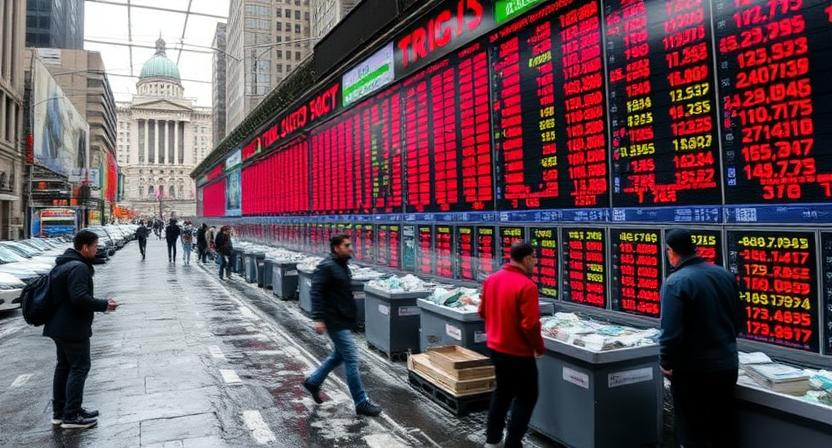
In recent months, global financial markets have been rocked by a sudden and dramatic downturn, largely attributed to an aggressive wave of tariffs imposed by major economies. What began as a strategic move to protect domestic industries quickly spiraled into a full-scale trade war, resulting in massive market instability. The most jarring evidence of this turmoil is the freeze of 543 stocks and the plunge of 775 others to their 52-week lows, signaling widespread investor panic and economic uncertainty. This blog delves into the intricate web of causes, consequences, and potential solutions surrounding the tariff-induced market crash.
Understanding Tariffs: A Double-Edged Sword
Tariffs are essentially taxes imposed on imported goods, designed to make foreign products more expensive and less attractive compared to domestic offerings. Governments often employ tariffs to protect fledgling industries or to retaliate against unfair trade practices. However, while tariffs may offer short-term protection, they frequently invite retaliation, disrupt supply chains, and increase costs for both producers and consumers. Tariffs Cause a Big Market Crash: 543 Stocks Freeze, 775 Hit Yearly Lows
The recent tariffs targeted a wide array of industries including technology, agriculture, automotive, and consumer goods. These measures disrupted the finely-tuned balance of global trade, causing ripple effects across supply chains and investor sentiment.
The Spark That Ignited the Fire: Escalation of Trade Tensions
The current crisis was triggered by a series of escalating tariff announcements between two of the world’s largest economies. Each round of tariff hikes led to retaliatory measures, turning what was initially a manageable economic strategy into a full-blown trade war.
Key events included:
Imposition of 25% tariffs on $300 billion worth of imported electronics and machinery.
Retaliatory tariffs on agricultural exports, causing a sharp decline in commodity prices.
Threats to impose duties on automotive imports, sparking fears in the global automobile industry.
These developments created an atmosphere of uncertainty and fear, prompting a rapid sell-off in stock markets around the world.
Investor Panic and Market Reaction
Stock markets thrive on stability and predictability. When these are compromised, investors tend to react swiftly, often irrationally. The announcement and implementation of new tariffs caused a significant shift in market sentiment:
543 stocks were frozen due to trading halts, often triggered by massive sell orders or attempts to prevent panic-induced volatility.
775 stocks hit their 52-week lows, reflecting deep losses and loss of investor confidence.
Sectors most affected included semiconductors, auto manufacturers, agricultural equipment producers, and logistics companies.
Index performance also plummeted, with the S&P 500 losing nearly 12% in a matter of weeks, while the NASDAQ suffered a 15% decline, wiping out billions in market capitalization.
Economic Fallout: Beyond the Stock Market
The consequences of the tariff war extended far beyond Wall Street. As supply chains were disrupted and costs increased, businesses began to scale back operations, delay investments, and reduce headcount.
Key impacts include:
Manufacturing slowdown: With higher input costs and disrupted logistics, production efficiency took a hit.
Consumer price inflation: Goods became more expensive, squeezing household budgets and reducing spending.
Job market pressures: Layoffs and hiring freezes became more common in affected industries.
Currency fluctuations: Safe-haven currencies like the US Dollar and Japanese Yen appreciated, while emerging market currencies depreciated sharply.
These changes contributed to a broader economic slowdown, with GDP growth forecasts being revised downward across multiple nations.
The Psychological Factor: Fear and Uncertainty
Financial markets are not just driven by fundamentals—they’re also influenced by investor psychology. The unpredictability of trade policy, coupled with alarming headlines, created a climate of fear.
Retail investors, in particular, were quick to exit positions, leading to greater volatility. Institutional investors also pulled back, reallocating funds to safer assets like gold and government bonds. This flight to safety further drained liquidity from the markets, exacerbating the decline.
Global Ripple Effects: A World Caught in the Crossfire
Because global markets are deeply interconnected, the tariff war between two major powers had international repercussions:
Export-driven economies like Germany, South Korea, and Japan saw significant downturns in industrial output.
Developing countries experienced capital outflows as investors sought safer havens.
Commodity markets crashed, with oil, soybeans, and copper prices plunging due to anticipated lower demand.
These dynamics threatened to push vulnerable economies into recession and triggered urgent responses from central banks and financial regulators.
Policy Responses: Central Banks and Governments Step In
In the face of a mounting crisis, policy-makers around the world began to take action:
Interest rate cuts by central banks aimed to stimulate lending and investment.
Fiscal stimulus packages were introduced to support affected industries and consumers.
Trade negotiations were fast-tracked in an attempt to ease tensions and restore market confidence.
Despite these efforts, recovery has been slow, as trust in international trade norms has been severely damaged.
Lessons Learned and the Path Forward
The current crisis has highlighted several critical lessons for investors, businesses, and policy-makers:
Diversification of supply chains is essential to reduce vulnerability to geopolitical risks.
Clear communication of trade policy can help manage market expectations and reduce panic.
Global cooperation remains vital in an interconnected economy—unilateral actions can have unintended global consequences.
As markets slowly recover, there's a renewed emphasis on stability, transparency, and resilience. Investors are now more cautious, favoring companies with strong fundamentals and international diversification.
Conclusion: Navigating a New Economic Landscape
The market crash caused by tariff escalation was a stark reminder of the fragility of global financial systems. While tariffs may serve short-term strategic goals, their long-term consequences can be devastating if not managed carefully. Moving forward, the focus must shift to rebuilding trust, strengthening economic cooperation, and creating safeguards that prevent such widespread disruption in the future.
In this new era of economic nationalism and protectionism, both investors and policy-makers must tread carefully. The storm may have passed, but its aftershocks will be felt for years to come. Understanding the causes and consequences of this crisis is the first step toward a more stable and secure financial future.


Comments